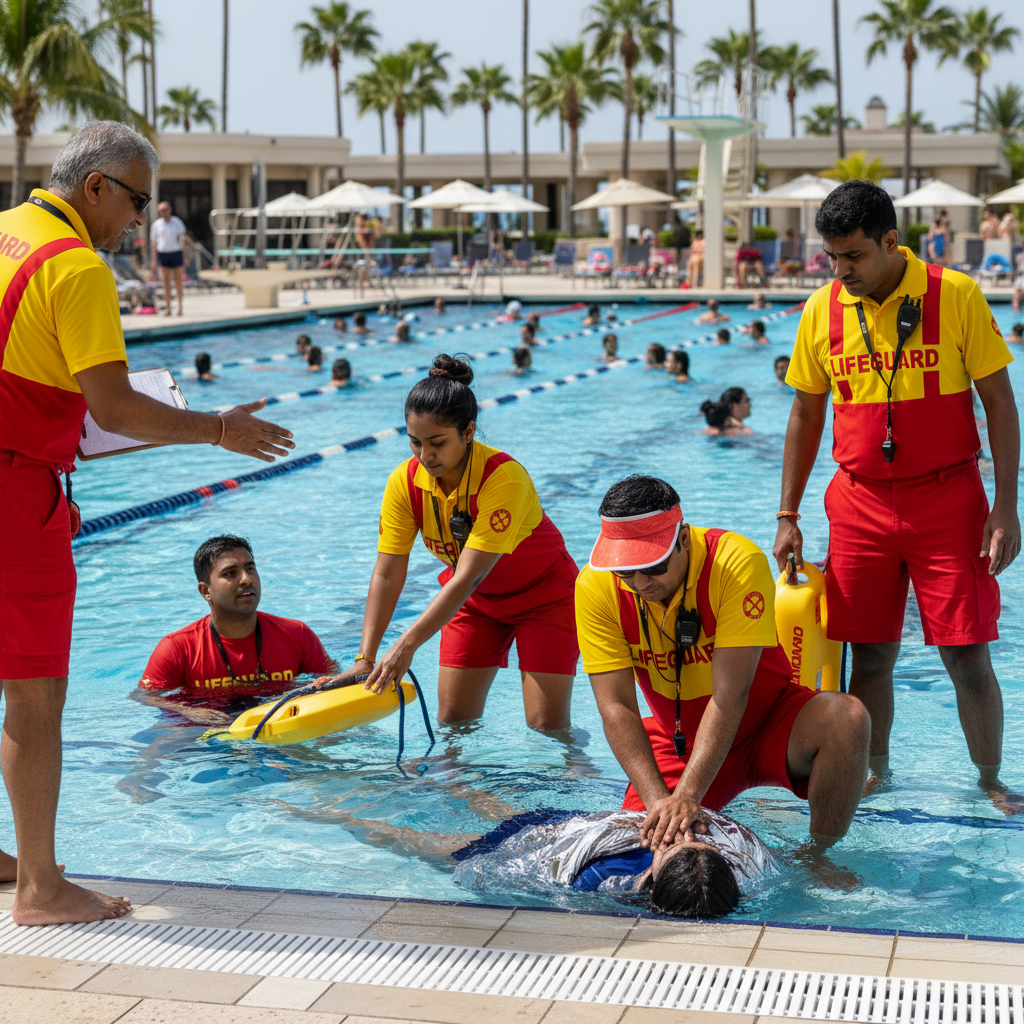
The Ministry of Labour, Government of India has officially recognized Lifeguarding as a profession. A Lifeguard is a trained professional responsible for ensuring the safety of people in and around aquatic environments such as swimming pools, beaches, lakes, reservoirs, rivers, and water parks.
Lifeguards prevent accidents by identifying signs of distress, educating the public about water safety, and performing water rescues, first aid, CPR, AED, and oxygen therapy in case of emergencies. They are skilled swimmers, equipped with specialized lifesaving and emergency response training.
A Lifeguard is a professional who performs duties as part of a responsible team, while a Lifesaver is a trained volunteer possessing similar rescue and first-aid skills, contributing to aquatic safety within their community.
• Supervise and Monitor:
Continuously observe swimmers and water sport participants to identify anyone in distress and ensure safety across the aquatic area.
• Rescue and Provide Care:
Perform water rescues using various techniques, aids, and equipment to respond effectively during emergencies.
• Administer First Aid and CPR:
Provide immediate care during medical emergencies, including CPR and first aid.
• Enforce Safety Regulations:
Ensure all safety protocols are followed, warn about unsafe conditions, and maintain a safe aquatic environment.
• Promote Water Safety Education:
Spread awareness and educate communities on drowning prevention and safe water practices.
Anyone can train to be a lifeguard with the following prerequisites:
Ability to work as part of a team
Good communication skills
Ability to swim 500 meters in 15 minutes (for pools) or 12 minutes (for beaches/open waters)
Basic understanding of water conditions and awareness of local hazards (e.g., recognizing rip currents)
Basic & Advanced Life Support (BLS & ALS):
Comprehensive first aid, CPR, AED use, and oxygen therapy
Water Rescue Techniques:
Lifesaving skills, emergency care, and rescue management
Spinal and Injury Management
Use of Safety Equipment and Hand Signals
Weather Response Awareness and Safety Reactions
With additional training, lifeguards can specialize in:
Pool Safety Audits & Compliance
Supervision Strategies for Pools & Beaches
Emergency Action Planning & Injury Prevention
Maintenance & Inspection of Safety Equipment
Water Quality & Facility Management
Report Writing & Emergency Communication
Entry/Exit Flow & User Desk Management
Lifeguards can advance through structured career levels:
Team Member → Team Leader → Supervisor → Captain of the Deck → Manager → General Manager
Progress depends on performance, specialization, and continued learning skills that can be enhanced through self-study and ongoing tutorials at the facility.